Posts

Culling the Celtic Furies

Image
  "Since the early 1980s the idea of the 'Celt' has been subjected to a multi-disciplinary assault ... The cumulative weight of all this 'celto-scepticism' is considerable." Jonathon Wooding, 2002, 'The idea  of the Celt', in Celts and Christians , p.39. This much is obvious from a range of book subtitles published soon afterwards, such as Michael Chapman's The Celts: The Construction of a Myth  (1992) and Simon James' The Atlantic Celts: Ancient People or Modern Invention  (1998).   A more discursive summary of the decades-long dispute is contained in a paper given by Simon Rodway called 'Celtic ― Definitions, Problems and Controversies' (2010). LF Vagalinski (ed.), 'In Search of Celtic Tylis in Thrace (111 C BC)', Proceedings of the Interdisciplinary Colloquium ... Held at the National Archaeological Institute and Museum, Sofia, Bulgaria, 8 May 2010 , pp 9-10. "The traditional consensus holds that the Celts spread from a ...

The PAUSE Before The PLUNGE

Image
I   " In 1912, the Titanic  created one of the first global media storms, with the New York Times  devoting its first twelve pages to the disaster ...  The sinking of the Titanic on April 15, 1912, was as shocking to the world as the destruction of the Twin Towers  on September 11, 2001." [Tim Maltin, 2012, Titanic , First Accounts , Penguin Classics, New York, p xvii]  'We begin with "The Sinking of the Titanic  Seen from a Lifeboat", the fourth chapter from second-class passenger Lawrence Beesley's The Loss of the Titanic , written in 1912 ... his account immediately places his reader right on the spot, watching Titanic  sinking.'      "First of all, the climatic conditions were extraordinary. The night was one of the most beautiful I have ever seen: the sky without a single cloud to mar the perfect brilliance of the stars, clustered so thickly together that in places there seemed almost more dazzling points of light set in the b...

REMEMBER, REMEMBER, THE FIFTH OF NOVEMBER

Image
The following narrative is from The Year of Lear : Shakespeare in 1606 by James Shapiro  (2015, Simon & Schuster, New York) The Masque On the evening of January 5, 1606, the first Sunday of the new year, six hundred or so of the nation's elite made their way through London's dark streets to the Banqueting House at Whitehall Palace ... With their dazzling staging, elegant verse, gorgeous costumes, concert-quality music, and choreographed dancing ― overseen by the most talented artists in the land ― masques under the new king were beyond extravagant, costing an unbelievable sum of three thousand pounds or more for a single performance ... Though it would have been impossible to tell from reading a contemporary account of that evening's masque, exactly two months earlier most of those who gathered to see it were almost killed in what we would now call a terrorist attack, one that had been prevented at the last moment. A group of disaffected Catholic gentry had plotted to b...

The Thucydides Trap

Image
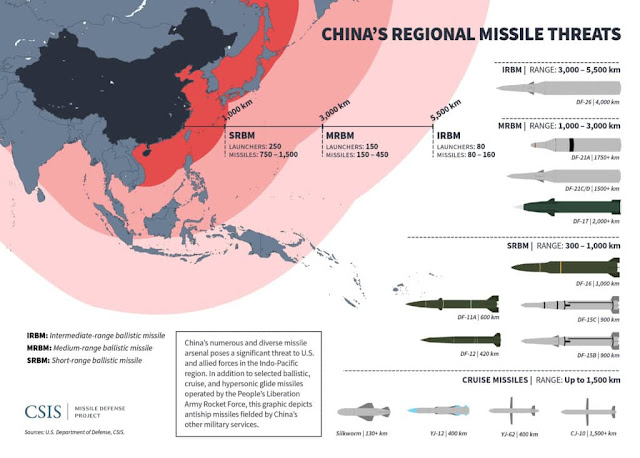
1st Lt A.Y.  Soderstrom USAF, 2021, 'Direct Military Conflict with China May Not Happen―and Why There Are Worse Outcomes', Journal of Indo-Pacific Affairs , 152-156   ARGUMENT "Thucydides originally wrote about the Peloponnesian War between Athens, the rising power, and Sparta, the hegemonic power. As Athens continued expanding its empire, Sparta became afraid for its independence and position. The war became inevitable once fear was so deeply instilled in Sparta. With China being a rising power and the United States being a current hegemonic power, it seems that war could be a high possibility. If media outlets keep spreading misinformation or twisting facts, a fear may be deeply instilled in either country, leading to war involving direct military conflict. However, in Ancient Greece, warfare was done [ONLY] by direct military conflict. They did not conduct cyberattacks, have nuclear weapons, or other means short of war that may not be as personal as bombs leveling build...

I am not drunk so much as tired

Image
  A DRUNK MAN LOOKS AT THE THISTLE  By Hugh M'Diarmid AN INTERLINEAR Scots―English VERSION based on the  William Blackwood & Sons, Edinburgh & London, 1926 edition (The Project Gutenberg eBook, Hathitrust Digital Library) (1)   A Drunk Man    p1 v1; p4 vv24-25; p5 v27. I amna' fou' sae muckles as tired ― deid dune. I am not 'full' [drunk] so much as tired ― dead done [exhausted]. It's gey and hard wark' coupin gless for gless It is great and very hard work matching [keeping up, tilting up] glass for glass Wi' Cruivie and Gilsanquhar and the like With [personal name] and [personal name] and the other drinkers, And I'm no' juist as bauld as aince I wes. And I am no longer as bold ['fierce', youthfull] as I once was. .................. But that's aside the point! I've got fair waun'ert . But that is beside the point! I have got quite 'wandered' [uncertain of my whereabouts,                   ...